
Finalist Judges

Courtney Schroeder
Courtney Schroeder is General Mills’ Head of Diversity, Inclusion and Belonging (DI&B). In this role, he is responsible for building on General Mills’ 30-year legacy of diversity and inclusion leadership. During his time, Courtney launched the Courageous Conversation platform, led the execution of the first Employee Network Summit, and introduced the concept of belonging in the workplace.
Courtney received his undergraduate degree in Business Economics and Political Science from the University of California Santa Barbara and a Master of Business Administration from the University of Michigan, Stephen M. Ross School of Business. He is a proud alumnus of both Management Leadership for Tomorrow as well as the Consortium for Graduate Studies in Management.
Outside of work, Courtney serves as the Vice Chair of the Board of Directors for Project for Pride in Living, a Twin Cities based housing and workforce development non-profit.
 John Lafkas
John Lafkas is Senior Editor, Cases and Pedagogy at Harvard Business Publishing. He has co-authored several cases and was previously an instructor at The Wharton School at the University of Pennsylvania, where he received his M.A. in Management.

Kim Eric Bettcher
Kim Eric Bettcher leads the Center for International Private Enterprise’s (CIPE) Policy and Program Learning (PPL) department, including knowledge management and applied research. PPL facilitates the international exchange of good practice, lessons learned, and policy options for democratic and market transitions. Dr. Bettcher has created numerous program resources for CIPE on democratic governance, private sector engagement, entrepreneurship ecosystems, public-private dialogue, and other themes. He also manages the secretariat of the Free Enterprise & Democracy Network.
Bettcher has published articles in the Harvard Business Review, Party Politics, SAIS Review, Diplomatic Courier, and the Business History Review. He has taught as an adjunct professor at George Mason University’s School of Public Policy and was previously a research associate at Harvard Business School. Bettcher holds a Ph.D. in political science from Johns Hopkins University and a bachelor’s degree from Harvard College.
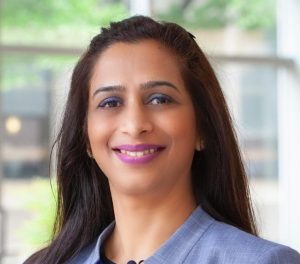
Shaista E. Khilji
Dr. Shaista E. Khilji is the Founding Editor-in-Chief of the South Asian Journal of Business Studies, and Professor of Human and Organizational Learning & International Affairs at The George Washington University, where she teaches graduate level courses on Leadership, Change, and Diversity & Inclusion.
Her research focuses on issues related to macro talent development, diversity & inclusion, humanizing organizations/ leadership, and individual experiences with inequality. She has published several articles in tier-1 scholarly journals, including the International Journal of Human Resource Management, Journal of World Business, Human Resource Management Review, and the Journal of Product Innovation Management, and presented more than 50 research papers at various international conferences. Her book, entitled “Globalization, Change and Learning in South Asia”, is a representation of the diversity of her research. She has taught and trained diverse audiences in Hong Kong, Singapore, Russia, United States, Canada, India, Morocco, and Pakistan. She has consulted with US and Canadian governments, higher educational institutions (in Singapore, Canada, Pakistan, Morocco, India and Cuba) and several organizations in the private and non-profit sector globally, including working on President Obama’s initiative to develop transparent culture in the federal government. She has also served as a co-principal investigator on a $1 million grant from the US State Department, entitled, “Development in Pakistan through Women’s Empowerment”.
Judging Criteria
- Topic/Content
- The protagonist and/or the case dilemma is clearly focused on diversity, equity and inclusion (DEI).
- Content focuses on a business effort/challenge that is compelling and significant within the DEI space.
- Teaching/Learning Value
- Engages students into an active learning mode.
- Provides students opportunities to analyze/solve relevant, practical, and regional business issues related to DEI.
- Contains elements allowing students to exercise higher-order, complex thinking. Requires more than just comprehension and memory.
- Intro/Overview
- Sparks interest & curiosity of the reader, drawing them into the narrative.
- Clearly introduces the protagonist & organization/company.
- Clearly identifies the dilemma, its time frame, & its tension/urgency.
- Protagonist/Organization
- Protagonist & organization clearly identified in the case introduction.
- There are appropriate details about the protagonist, including their role in the organization, career history, etc.
- There are appropriate details about the organization or company such as mission, revenue, history, P&L statements, culture, geo locations, competitors, etc.
- Adequate context is provided for both the protagonist and organization, relative to the concept of the case.
- Dilemma
- Dilemma & time frame clearly identified in the case introduction, along with its urgency.
- Dilemma can realistically be solved by the protagonist.
- Dilemma has applicability beyond the immediate situation described in the case.
- Case specifies at least two questions that students need to address to solve the dilemma.
- Dilemma challenges students to analyze the situation & develop multiple, integrative solutions.
- Writing/Inclusive Case Design/Citations & Endnotes
- Documents are free from structural, grammatical, spelling, & typographical errors.
- Diversity & inclusiveness is reflected throughout individual case elements such as the protagonist, writing style, & language.
- Complete citations & endnotes are included for any quoted material such as facts, figures, & other data.
- Teaching Note
- Includes clear, measureable teaching objectives.
- Pedagogy identifies case audience, business disciplines, & prerequisite knowledge or courses.
- Assignment questions can be answered based on information provided in the case.
- Includes comprehensive answers to assignment questions, along with appropriate analysis.
- Includes explanations/sources for conceptual frameworks &/or business models students should use in their case analysis.
- Includes a teaching plan that suggests how to allocate time in-class for the case discussion.
Review and Judging Process
- First and second rounds of reviews will be double-blind, i.e., the reviewers will not know the identity of the submitting author(s), and vice versa.
- Finalist judging will be reverse single-blind, i.e., finalist judges will not know the identity of the submitting author(s), but authors will know the identity of the finalist judges, as they are featured above.
Previous Winners
2024:
- First Place: Global Firm and Local Labor: Delivering Paid Parental Leave
- Second Place: Sheroes Hangout: Empowering India's Acid Attack Survivors to Face the Future
- Third Place: Between Autonomy and Concession: A Female Entrepreneur's Struggle in Latin America
2023:
- First Place: Diversity, Equity, and Inclusion Initiatives at Levi Strauss & Co.: Are They Enough?
- Second Place: Rhino Foods' People-Profit Dilemma: Inclusive Workforce Challenges and Opportunities
- Third Place: The Quest for Gender Pay Equity at Elemental Systems
- Honorable Mention: Breaking Bread: DEIB Challenges Impact a Peruvian Corporation's Potential
- Honorable Mention: Diversity on Screen: Allure Studios' Challenging Casting Decision
2022:
- First Place: Navigating SheaMoisture through a Racial Awakening: Cara Sabin’s Authentic Leadership
- Second Place: Perks or Rights? Accommodating Neurodiversity in the Unionized Workplace
- Third Place: How Can Shoppers Market Create an Inclusive Environment for Women of Color?
- Honorable Mention: Activision Blizzard, Inc.: Facing the Call of Duty with a Laser Focus on Women
- Honorable Mention: DEI at Dynamo Relations: The Challenges of Remaining an Inclusive Company
2021:
- First Place: Cyrus Mehri and the National Football League's Rooney Rule (2021)
- Second Place: Oiselle: How Does an Activist Brand Authentically Commit to Diversity, Equity, and Inclusion?
- Third Place: Does the U.S. Hospitality Market Offer Fertile Soil for Lemon Tree Hotels' Inclusive Business Model?
- Honorable Mention: Dr. Bonnie Henry: Contending with COVID-19 in Visible Minority Communities
Sponsors
Thank you for the support of our sponsors. Learn more about them here.
